If you're thinking about working in care, one of the first questions is simple: how much will I actually earn?
Here's an honest guide to care assistant pay in 2026, what changes it, and how to move up.
The starting point: £12.71 an hour
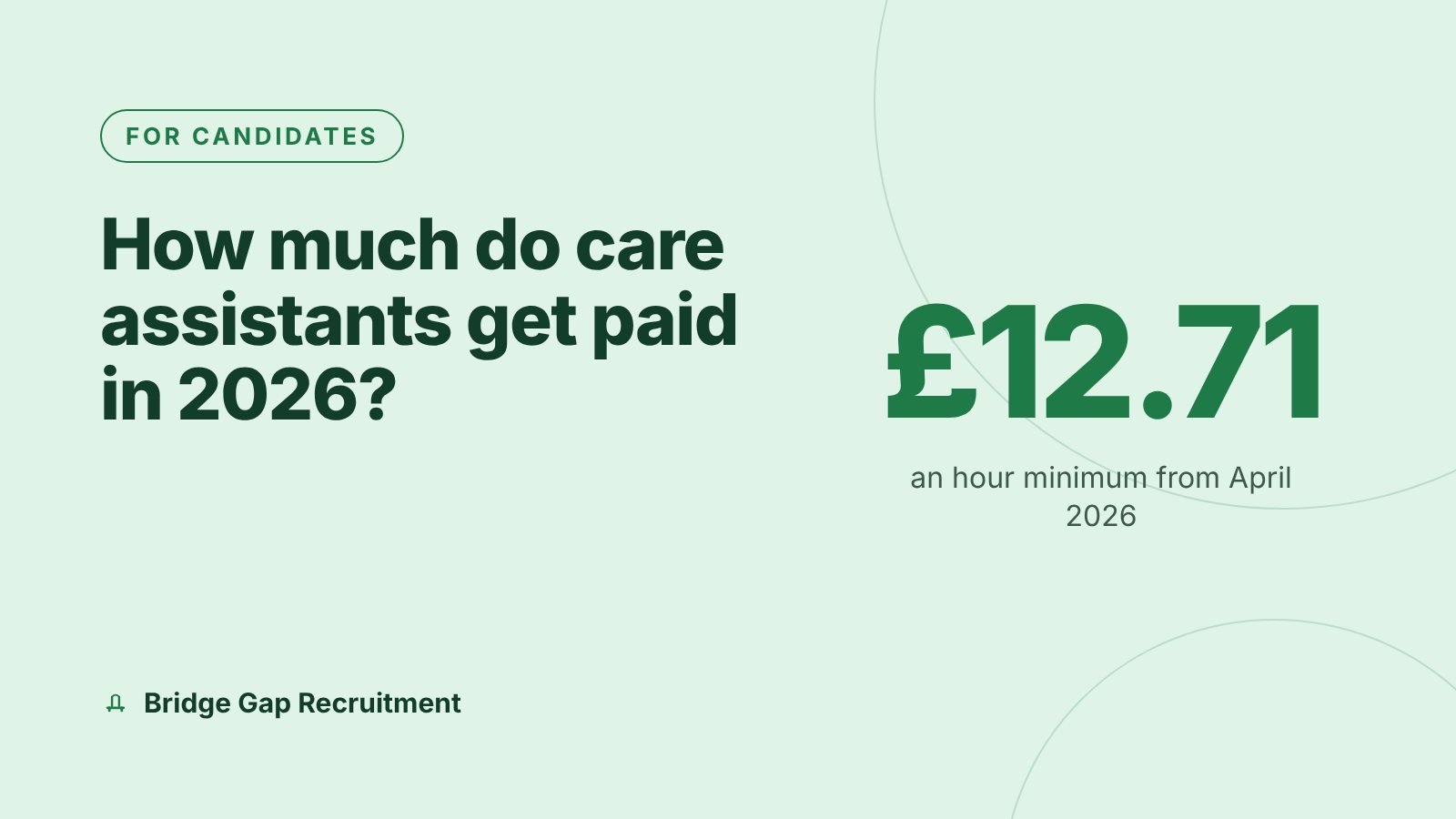
From 1 April 2026, the National Living Wage is £12.71 an hour for anyone aged 21 and over. That's the legal minimum, so no care assistant job in the UK should pay less than this if you're 21 or older.
For a full-time role of 37.5 hours a week, £12.71 an hour works out at roughly £24,800 a year before tax.
If you're 18 to 20, the legal minimum is £10.85 an hour, although many care employers pay all their care assistants the same rate regardless of age.
What most care assistants earn
In practice, most care assistant jobs pay between £12.71 and around £14 an hour. Where you land depends on a few things:
- Where you work. Pay is usually higher in Oxford, London and the South East, where living costs are higher.
- The type of care. Nursing homes, dementia care and complex care often pay a little more than residential care.
- Your shifts. Some employers pay extra for nights, weekends and bank holidays.
- Your experience and training. Completing your Care Certificate and further qualifications can lead to a higher rate.
How to earn more in care
Care has a clear career path, and pay rises as you take on more responsibility:
- Care Assistant: where most people start, no experience needed.
- Senior Care Assistant: leading shifts, handling medication and supporting newer staff.
- Team Leader or Care Coordinator: organising rotas, care plans and the day-to-day running of the home.
- Deputy Manager and Registered Manager: running the service, with salaries well above entry level.
Many senior staff and managers started as care assistants. If you're reliable, kind and keen to learn, progression can come quickly.
More than the hourly rate
When you compare jobs, look beyond the pay per hour:
- Guaranteed hours. A permanent contract with set hours is worth more than a higher rate with no guaranteed shifts.
- Paid training. Good employers pay you while you train.
- Travel. A short commute saves money and makes early shifts much easier.
- Holiday and pension. All employees get paid holiday and, if eligible, a workplace pension with employer contributions.
Do I need experience or qualifications?
No. Many care homes hire people with no care experience at all, as long as you have the right values: kindness, patience, reliability and respect for the people you care for. You'll complete the Care Certificate during your first weeks in the job.
Studying Health and Social Care, psychology or nursing is a real advantage, and so is caring for a family member, volunteering, or customer-facing work.
Looking for a care job?
At Bridge Gap Recruitment, I help people find permanent care jobs with care homes that value their staff. We match you to roles that suit your location, hours and goals, so you're not applying blind.
You'll need the right to work in the UK. Register your profile and I'll be in touch when a suitable role comes up, or browse our current jobs.